
Drainage · 7 min read
Why Your Willamette Valley Yard Won't Drain (and What to Do About It)
The GI Landscape Team · March 15, 2023 · Updated May 21, 2026
If you live in the Portland metro or anywhere down the valley to Salem, your yard is probably sitting on three things at once: forty inches of rain a year, a clay layer that doesn't let water through, and grading that was done by a builder who was thinking about lot lines, not water flow. Most of the wet-yard problems we get called for in Canby, Wilsonville, West Linn, Lake Oswego, and Oregon City come down to some combination of those three.
This is the field guide to figuring out what's actually wrong with your yard — and which fix solves which problem. We've installed a lot of French drains. We've also told a lot of homeowners to just extend the downspouts and save the money.
How to read the symptoms
Different drainage problems look different. The fixes don't transfer. Here's what we see on site visits and what it usually means:
Standing water after every rain.A puddle that sits for two or three days in the same spot every time it rains is almost always grading. Water is collecting because the ground around it is higher. The fix is regrading or, if regrading isn't practical, a catch basin that intercepts the water and pipes it out.
Soggy lawn that won't recover.A whole yard that stays mushy from November through April, with moss creeping in, isn't usually a localized drainage problem. It's the clay layer holding water across the whole lot. The fix is a network of subsurface drains (French drains) that pull water down and out, sometimes combined with topsoil amendment and aeration.
Water in the basement or crawlspace.Almost always grade against the foundation. Builders are supposed to slope the ground away from the house at 6 inches over 10 feet. A lot of yards in this region don't — settling, landscaping changes, or the builder just didn't grade right. The fix is regrading the first 10 feet around the house and extending downspouts well past that zone.
One specific wet spot in an otherwise dry yard.Either a buried downspout outlet that failed, an underground spring (more common than people think in this region), or a low spot the rest of the yard drains toward. The fix depends on which one — we have to dig to find out.
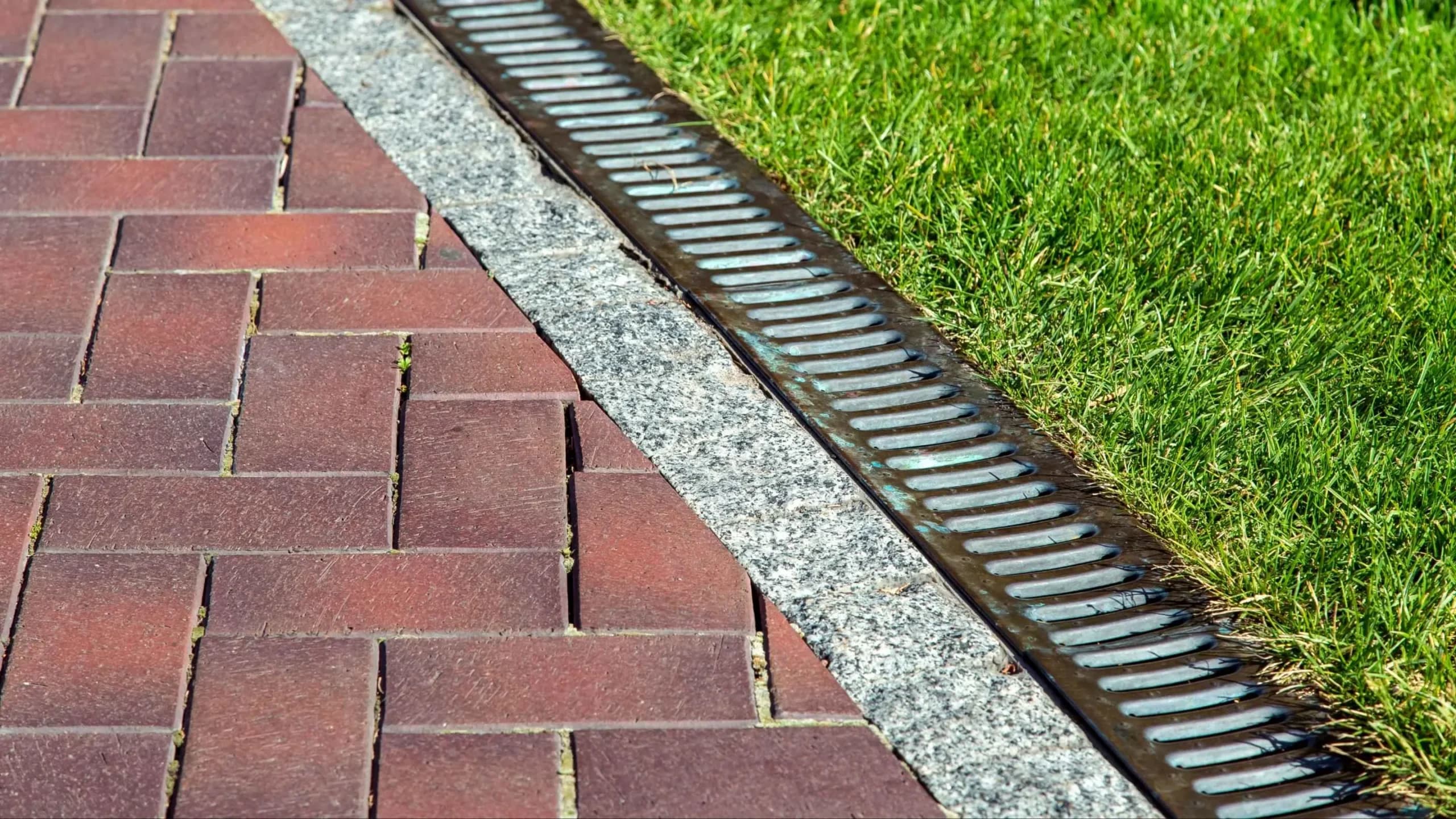
Water sheeting across a driveway or sidewalk. Surface flow from a roof or a slope, with no plan for where it goes. The fix is usually a channel drain across the path of the water and a pipe carrying it to a safe outfall.
What's actually under your yard
Most of the Willamette Valley sits on a few feet of topsoil over a clay layer that's been there since the Missoula Floods finished depositing it about 13,000 years ago. The clay is impermeable — water doesn't move through it the way it moves through sand or loam.
In a normal climate, that wouldn't matter. In ours, it matters a lot. Forty inches of rain a year, most of it concentrated between October and April, means the topsoil layer saturates fast and then has nowhere to go. The water sits on top of the clay, gradually moving downhill if there's any slope, sitting in place if there isn't.
This is why drainage fixes that work in California or Texas don't always work here. A French drain that ends in a “dry well” full of gravel works fine in sandy soil — water percolates out the bottom. In our clay, that same dry well just fills up and sits there. The water has to go somewhere — daylight to a low spot, tie into a storm drain, or terminate in a properly-sized soakage trench at a depth where the soil actually infiltrates.
The fixes, ranked by cost
In rough order of cheapest to most expensive, and what each one solves:
- Downspout extensions ($50–$300, DIY-able). If your downspout dumps within 5 feet of the foundation, get it out to at least 10 feet. This alone solves a surprising number of basement seepage problems and costs almost nothing.
- Regrading the first 10 feet around the house ($800–$3,500). Building up the soil so it slopes away from the foundation at 2% (6 inches over 10 feet). Solves a lot of basement issues and standing-water-near-house problems. Often combined with extending downspouts.
- Channel drain at a problem spot ($600–$2,500). A linear grate-covered trough that intercepts surface water before it crosses a sidewalk or pools at a patio edge.
- French drain to daylight ($1,800–$6,500).A trench with perforated pipe in drainage rock, wrapped in geotextile fabric, running on a 2% fall to a low spot or a curb cut. Most common drainage install we do. Solves wet yards and saturated lawns when there's somewhere for the water to go.
- Dry well or soakage trench ($1,500–$4,000 added to a French drain). Used when there's nowhere to daylight. Has to be sized correctly for clay soil infiltration rates — Portland's soakage trench guidance requires 2 inches per hour minimum infiltration, which often means going deeper than people expect to get below the clay.
- Full yard drainage network ($6,000–$20,000+).Multiple French drains, a dry well or storm tie-in, regrading, downspout reroutes — the works. Used on whole-lot saturation problems, often combined with new landscaping.
- Pumped sump systems ($2,500–$8,000).When gravity drainage isn't possible because the lot is flat and there's nowhere to daylight, sometimes a pumped system is the only answer. We don't love them (more parts to fail) but they're sometimes the right call.
Why GI Landscape
4.9 stars from 47 Google reviews · Five-year warranty on hardscape · No payment upfront · Licensed, bonded, and insured · Canby-based since 2016.
Prefer to talk? Call 503-984-1670 or request a quote.
Frequently asked questions
Will a French drain fix my wet yard?
Often, yes — if the water has somewhere to go. In clay soil with no daylight available, a French drain by itself can make things worse (you've now concentrated water in one place). It needs to terminate somewhere: a low spot, a storm tie-in, or a properly-sized dry well below the clay layer.
How do I know if I have a clay layer?
Dig a hole 18 inches deep and fill it with water. If it's still half-full 4 hours later, you've got clay (or another low-infiltration soil). This is the same field test the city uses to determine whether a property can use a soakage trench.
Can I just plant water-loving plants and skip the drainage work?
Sometimes. Rain gardens with native sedges, dogwood, and certain grasses can handle a lot of water in the right spot. They don't solve basement seepage or sitting water against a foundation, but they can turn a problem corner into a usable wet zone.
Why is moss taking over my lawn?
Saturated soil for too many months of the year. Moss isn't the problem — it's the symptom. You can spray moss every spring and it'll come right back unless you fix the underlying saturation.
Are there permits for drainage work?
Most yard drainage doesn't need a permit. Tie-ins to the city storm system do. Large dry wells sometimes do. We handle the permit conversation if it comes up.
Related reading
- Drainage solutions service page— what we install
- Retaining walls— when drainage problems involve slope failure