
Hardscape · 6 min read
Pavers vs Concrete Patios in Oregon Rain — A PNW Builder's Take
The GI Landscape Team · April 20, 2023 · Updated May 21, 2026
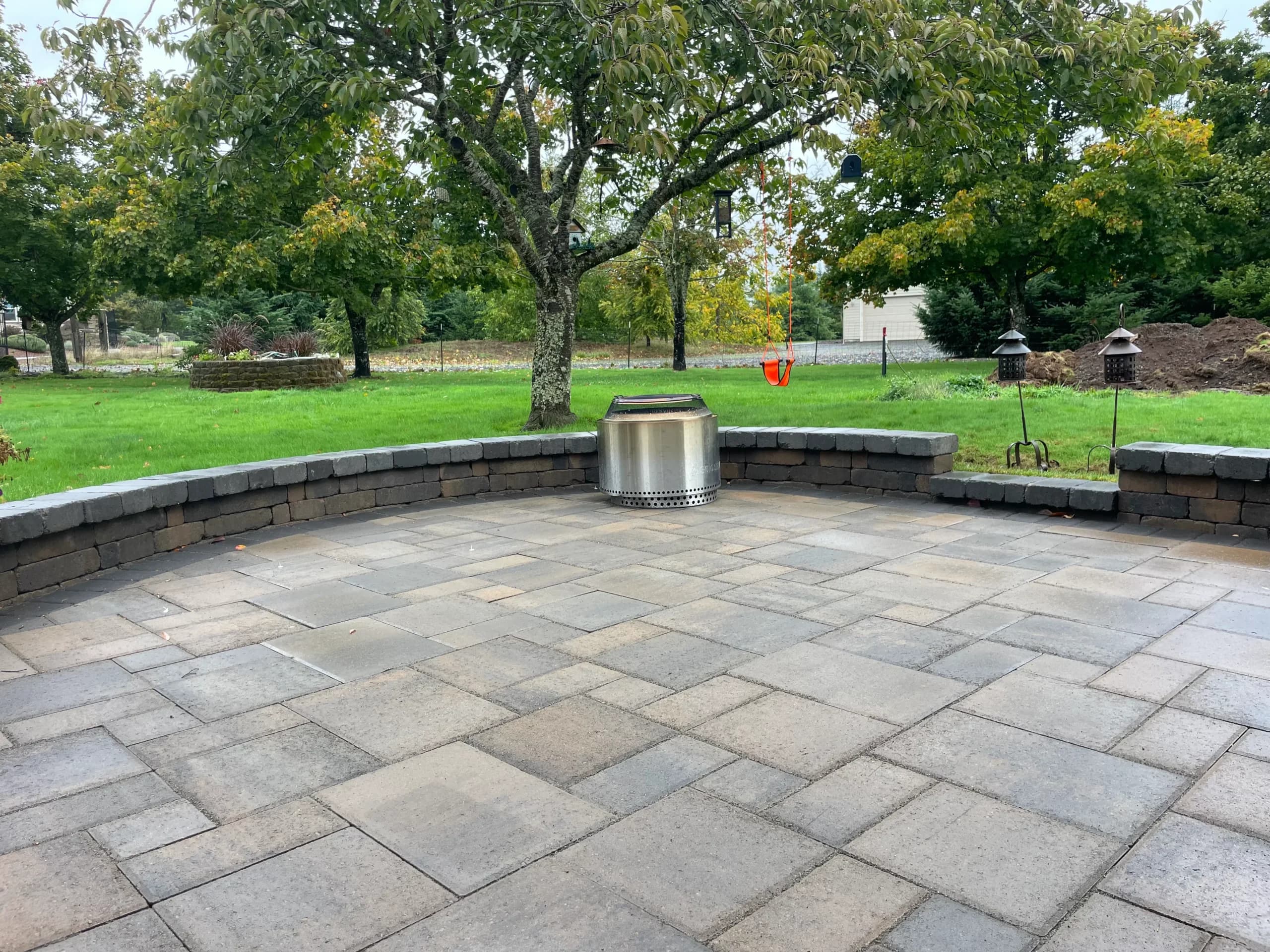
We install both. We install way more pavers than poured concrete, and there's a reason for that: in 40 inches of rain a year, with a clay layer under most yards, with freeze-thaw cycles that cross zero a dozen times every winter, pavers hold up better and repair cheaper than concrete. That's not a sales pitch — we'd happily pour concrete if it lasted. It just doesn't, here, the way it does in California.
Below is the comparison the way we'd lay it out to a homeowner on a site visit. Cost, drainage, repair, lifespan, looks. Both materials, honestly.
Cost up front
| Concrete (poured) | Pavers (concrete) | Pavers (premium / stone) | |
|---|---|---|---|
| Installed, per sq ft | $8 – $14 | $20 – $35 | $30 – $60+ |
| 20×20 patio (400 sq ft) | $3,200 – $5,600 | $8,000 – $14,000 | $12,000 – $24,000+ |
| Stamped / colored concrete | +$4 – $9 / sq ft | — | — |
Concrete wins on upfront cost — usually by a factor of 2. That's the only place it wins outright. The reason most quotes you're comparing aren't apples-to-apples is that good concrete prep and good paver prep aren't priced the same way: a cheap concrete pour skips rebar and a real base; a cheap paver job skips drainage and edge restraint. Comparing the cheap version of both gets you a number that's misleading on both sides.
What happens in our climate
This is where it gets interesting.
Concrete in 40 inches of rain.Concrete is porous. Water gets into the surface, especially at hairline cracks (which every slab develops). When it freezes — and it does, several times every winter in the Willamette Valley — the water expands and breaks the surface up. Over 10-15 years, a concrete patio in this region goes from “fine” to “needs replacing” surprisingly fast. Sealing it slows the process but doesn't stop it.
Pavers in 40 inches of rain.Water moves between paver joints into a permeable base layer, then drains down or out. The pavers themselves are denser (made under pressure, not poured), so freeze-thaw doesn't fracture them the way it cracks slabs. A 30-year-old paver patio in this region looks tired but is still structurally sound. A 30-year-old concrete patio is usually replaced.
Concrete on clay.Clay swells when wet and shrinks when dry. A poured slab on top of clay moves with the soil — and because concrete is rigid, it cracks. Even with rebar. The crack lines you see in old PNW patios are clay movement, not bad concrete.
Pavers on clay.Pavers move with the soil too — but each paver is independent. They flex without breaking. If one section sinks, you pull pavers, add base material, replace them. The whole patio doesn't become a project.
Repair (the part nobody asks about until it matters)
If a paver lifts or sinks because a tree root got under it, or a section settles, the repair is straightforward: pull the affected pavers, fix the base underneath, replace the pavers. We've done a hundred of these. Cost is usually a few hundred to a thousand dollars for a localized fix.
If a concrete patio cracks or settles, the options are: live with it, fill the crack and pretend you didn't (it'll be back), grind and reseal the surface (cosmetic), or break it out and pour a new one. There's no in-between. Concrete patio repair is replacement.
This is the part of the comparison that doesn't show up in upfront-cost calculations and where pavers earn back their price over 20-30 years.
Looks
Both can look great. Both can look bad.
Concrete done wellis broom-finished or lightly stamped, properly colored (integral color holds up better than topical stain), with control joints cut into the slab at planned intervals — so when it cracks, it cracks where you put the line. It looks clean and modern.
Concrete done badly is unsealed gray, with random surface cracks, with discoloration where water pools, with stamps that have started to fade. Most older concrete patios in this region look like this.
Pavers done well are laid in a clean pattern, with cut edges (we use a saw, not just snap-cut), polymeric sand in the joints, and edge restraints that hold everything in line. They look like they belong.
Pavers done badlyare misaligned, with weeds growing in the joints (the polymeric sand failed because it wasn't installed right, or wasn't used at all), with edges migrating outward, sometimes with mismatched replacements from a paver line that's been discontinued.
Quality of install matters more than choice of material. That's where the warranty piece really matters — see below.
When concrete actually makes sense
We'll quote concrete and recommend it in specific cases:
- Big simple slabs. A 1,000+ sq ft slab where pavers would just look busy. Concrete reads cleaner at scale.
- Modern architectural houses where the design calls for monolithic surfaces.
- Garage aprons and utility surfaces where look matters less than load-bearing and ease of cleaning.
- Tight budgets where pavers aren't on the table. A poured patio is better than no patio.
For most residential outdoor living spaces in the Portland metro and the Willamette Valley, pavers come out ahead. But the choice isn't one-size-fits-all.
The bottom line
Five-year house, tight budget: concrete. Fifteen-plus years, and you don't want to deal with it again: pavers, and it's not close once you count repair and replacement.
For this specific climate — clay, 40 inches of rain, freeze-thaw — pavers are what we build most of the time, and what we'd put in our own yards. Yes, we have a bias. Worth knowing.
Why GI Landscape
4.9 stars from 47 Google reviews · Five-year warranty on hardscape · No payment upfront · Licensed, bonded, and insured · Canby-based since 2016.
Prefer to talk? Call 503-984-1670 or request a quote.
Frequently asked questions
Is it cheaper to pour concrete or lay pavers?
Concrete is cheaper upfront — about half the cost of pavers per square foot in Portland ($8–$14 vs $20–$35). Over 20-30 years, pavers usually come out cheaper once you factor in repair and replacement.
Do pavers really drain better than concrete?
Yes. Water moves through paver joints into the base layer below. Concrete is essentially impermeable — water sheets across it and pools at the edges. In a 40-inch rain climate, paver drainage matters.
Will my concrete patio crack in Oregon?
Eventually, yes. Almost every concrete patio in the Willamette Valley develops surface cracks within 5-10 years. Good control joints (cut into the slab during installation) hide where it cracks so it's less noticeable. Rebar slows it down. Nothing prevents it entirely.
Can I lay pavers myself?
The pavers themselves, yes. The base prep is where DIY paver installs fail — without proper compaction, drainage, and edge restraint, the patio looks great for one summer and starts moving the next winter. If you DIY, spend most of the time on the base.
Which lasts longer in Oregon — pavers or stamped concrete?
Pavers. Stamped concrete is the worst of both worlds in this climate: it's still concrete (cracks, freeze-thaw) but with surface texture that traps moisture and accelerates the failure. We don't recommend stamped concrete for outdoor patios in the PNW.