
Drainage Solutions
Drainage that just works.
Exceptional drainage should be experienced through results, not visibility. We diagnose how water actually moves on your property, then fix it properly so it stays fixed.
What we build
Everything drainage solutions covers.
- French drains — perforated pipe with proper bedding
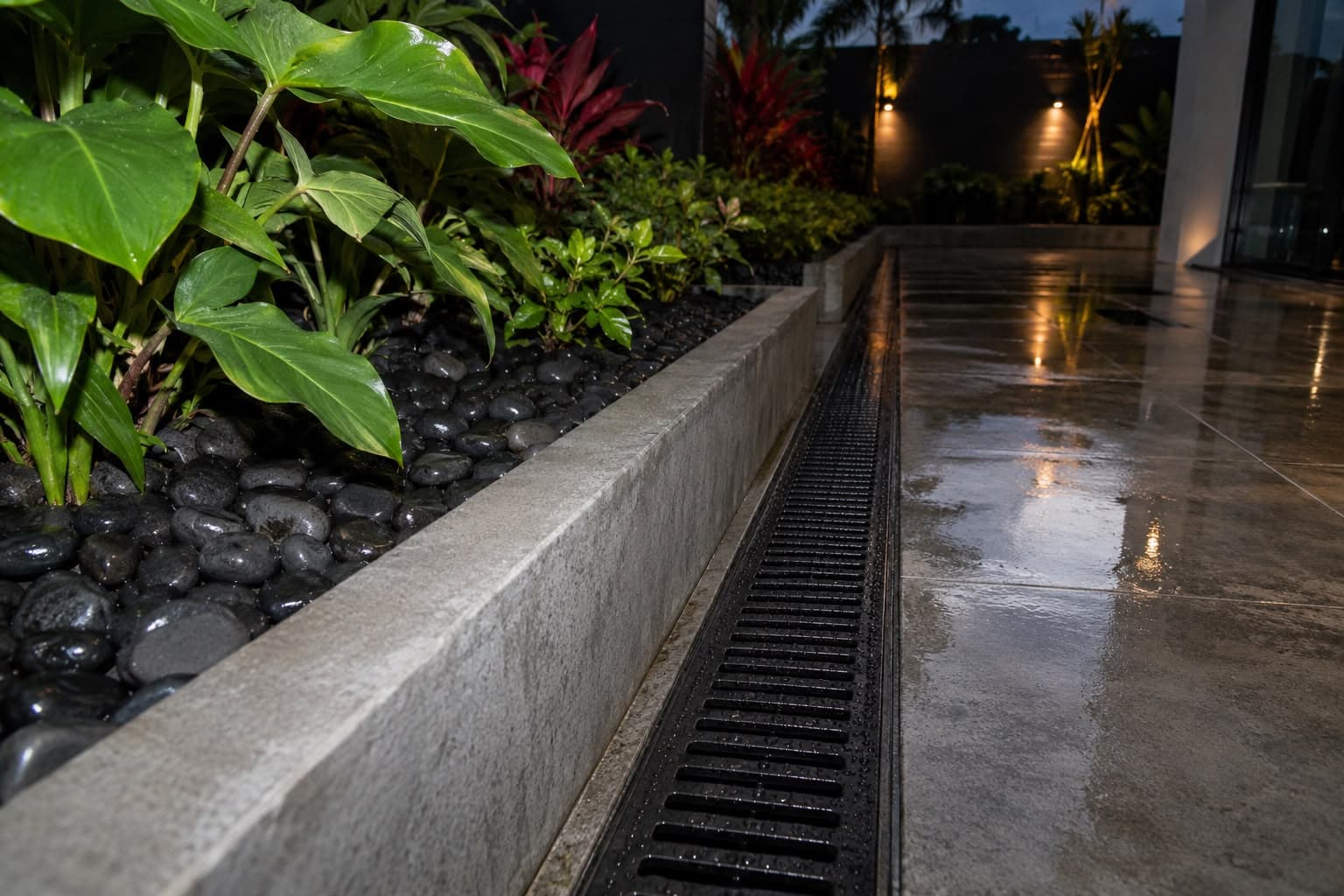
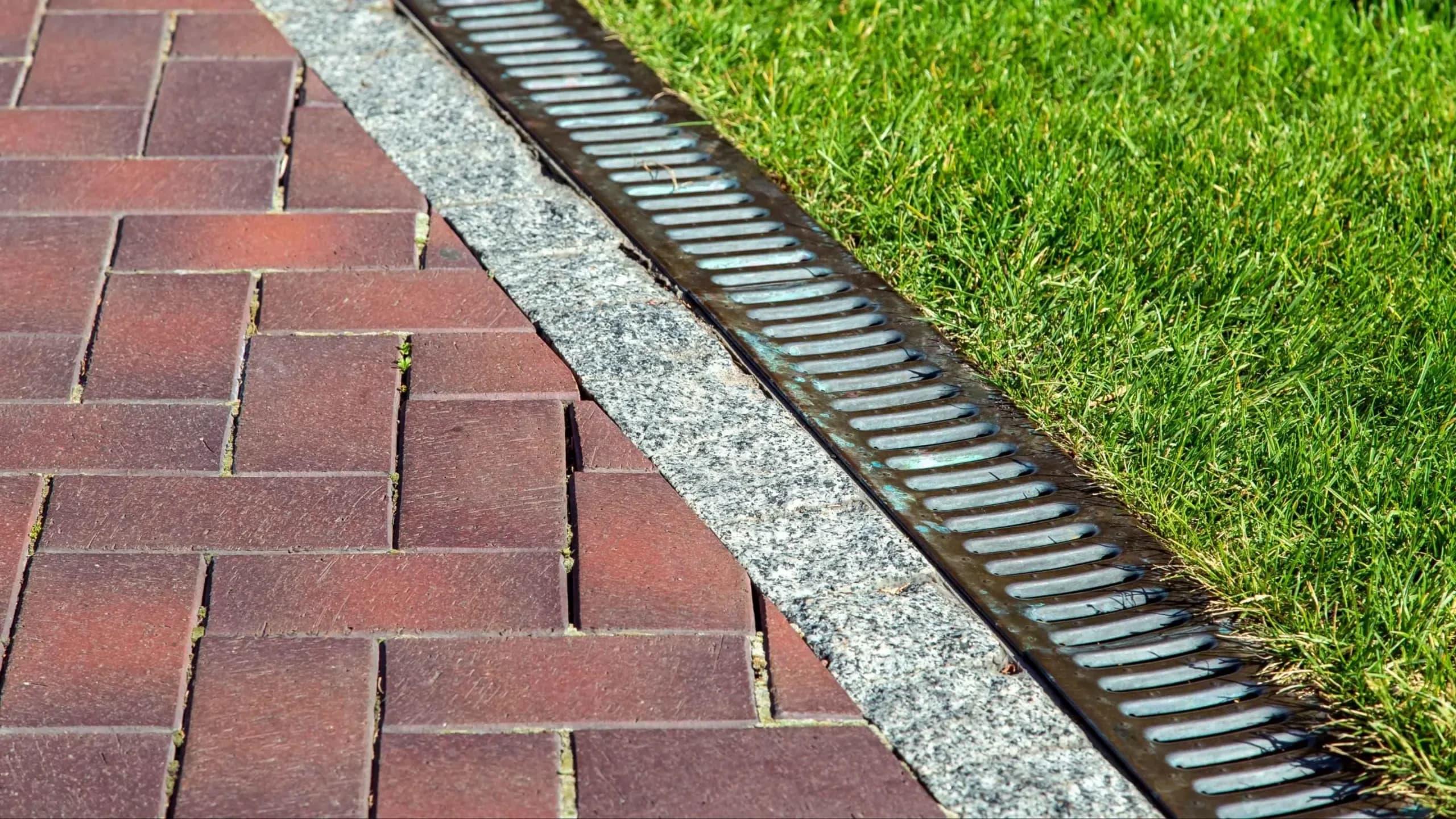
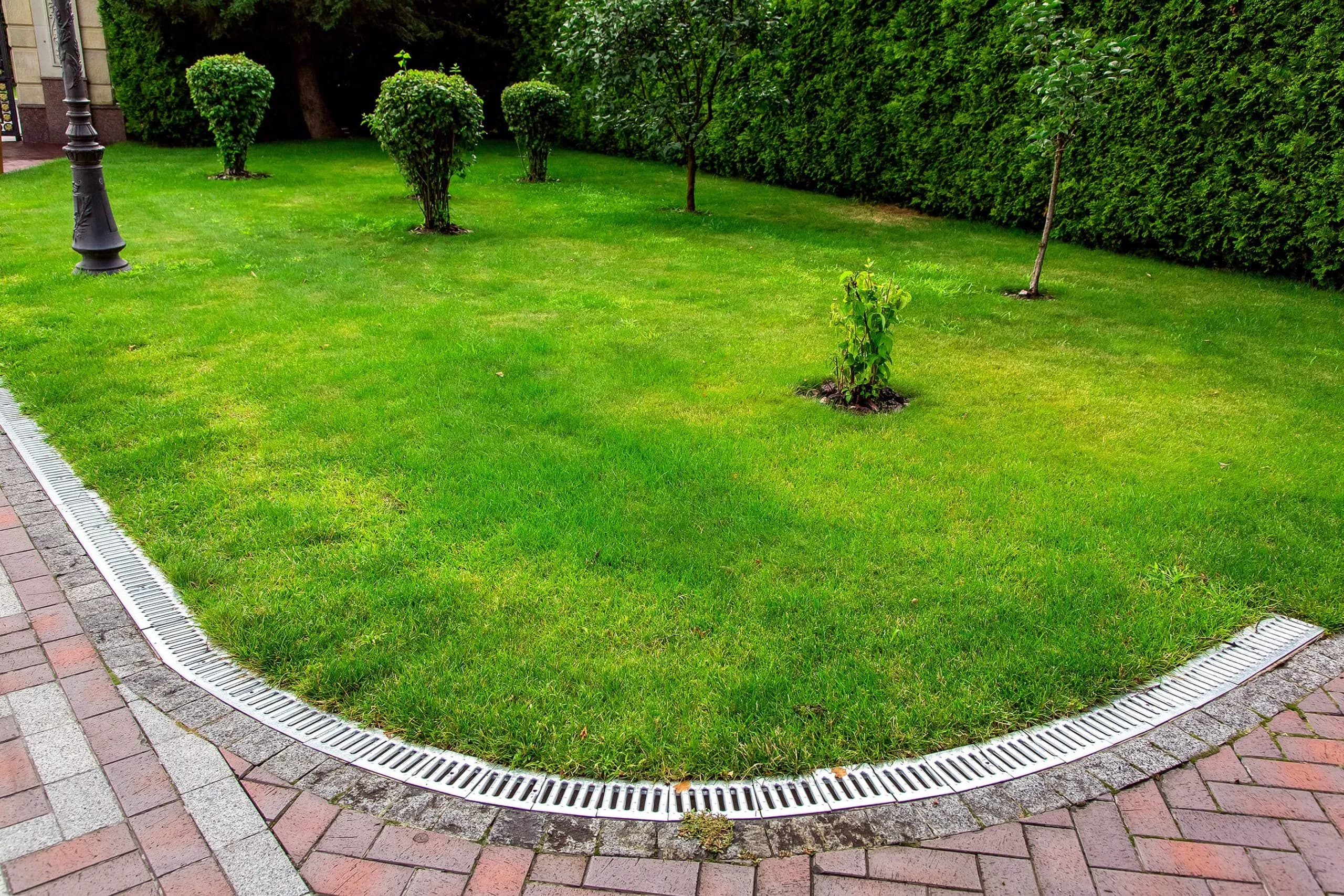
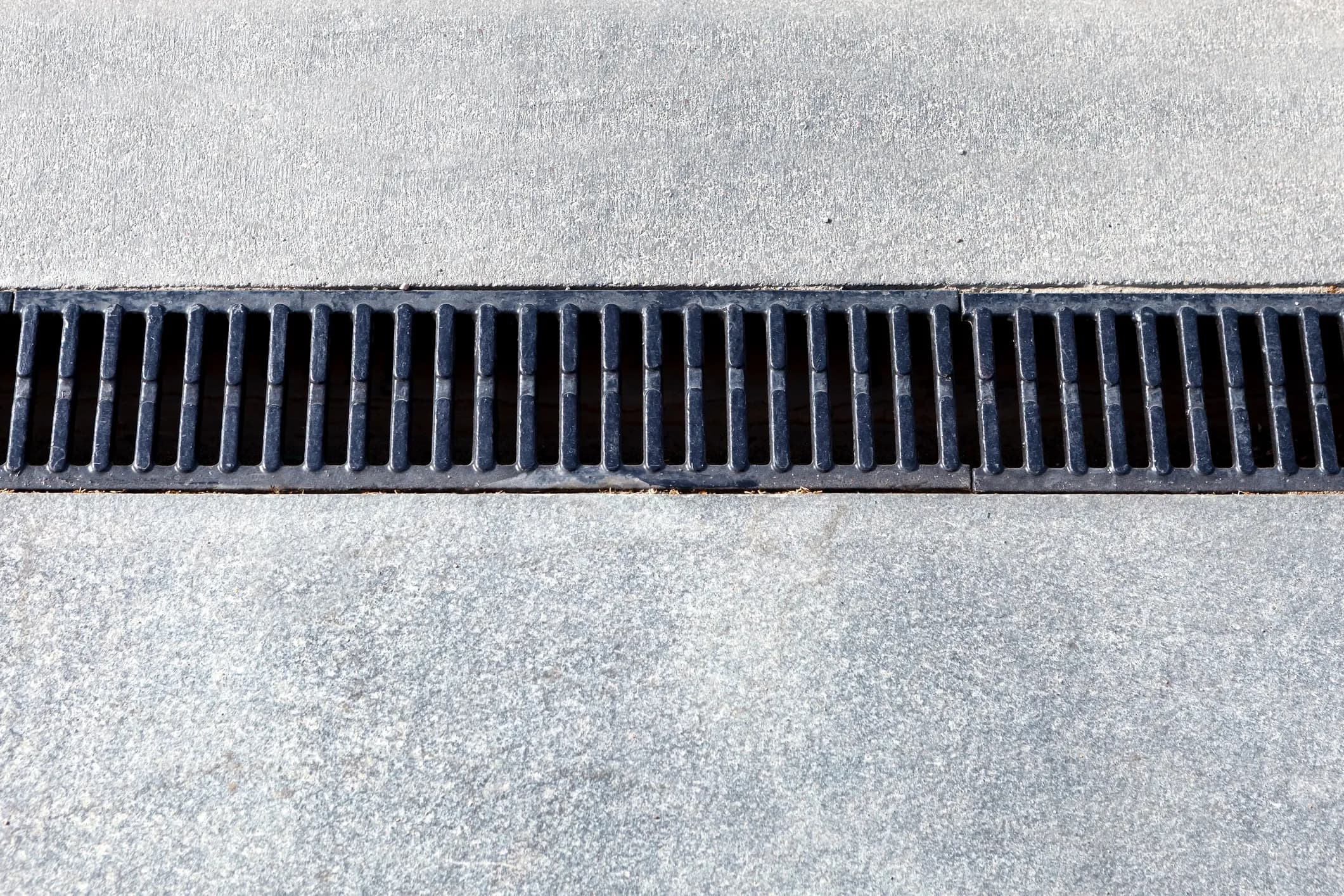
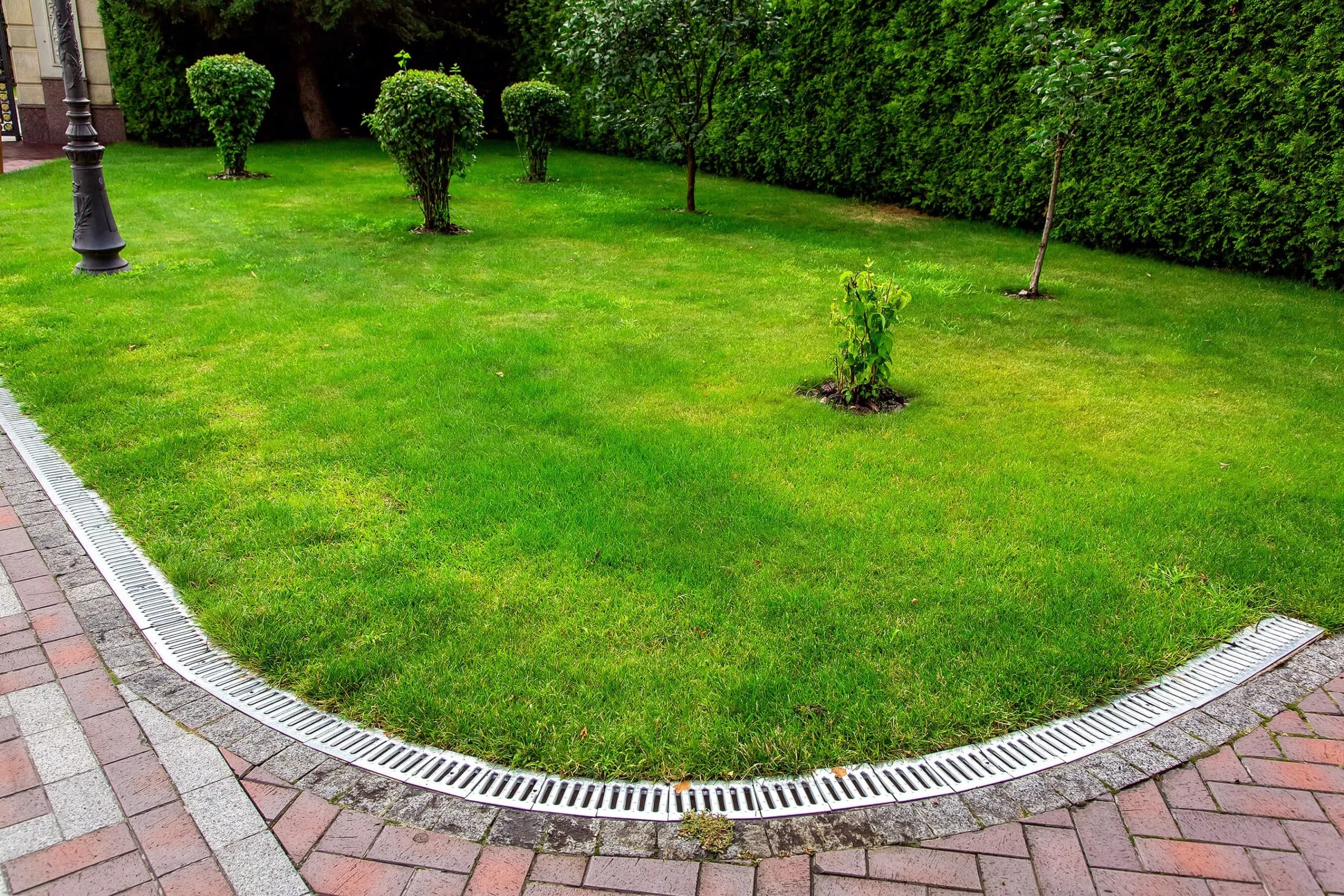
- Channel drains across driveways and walkways
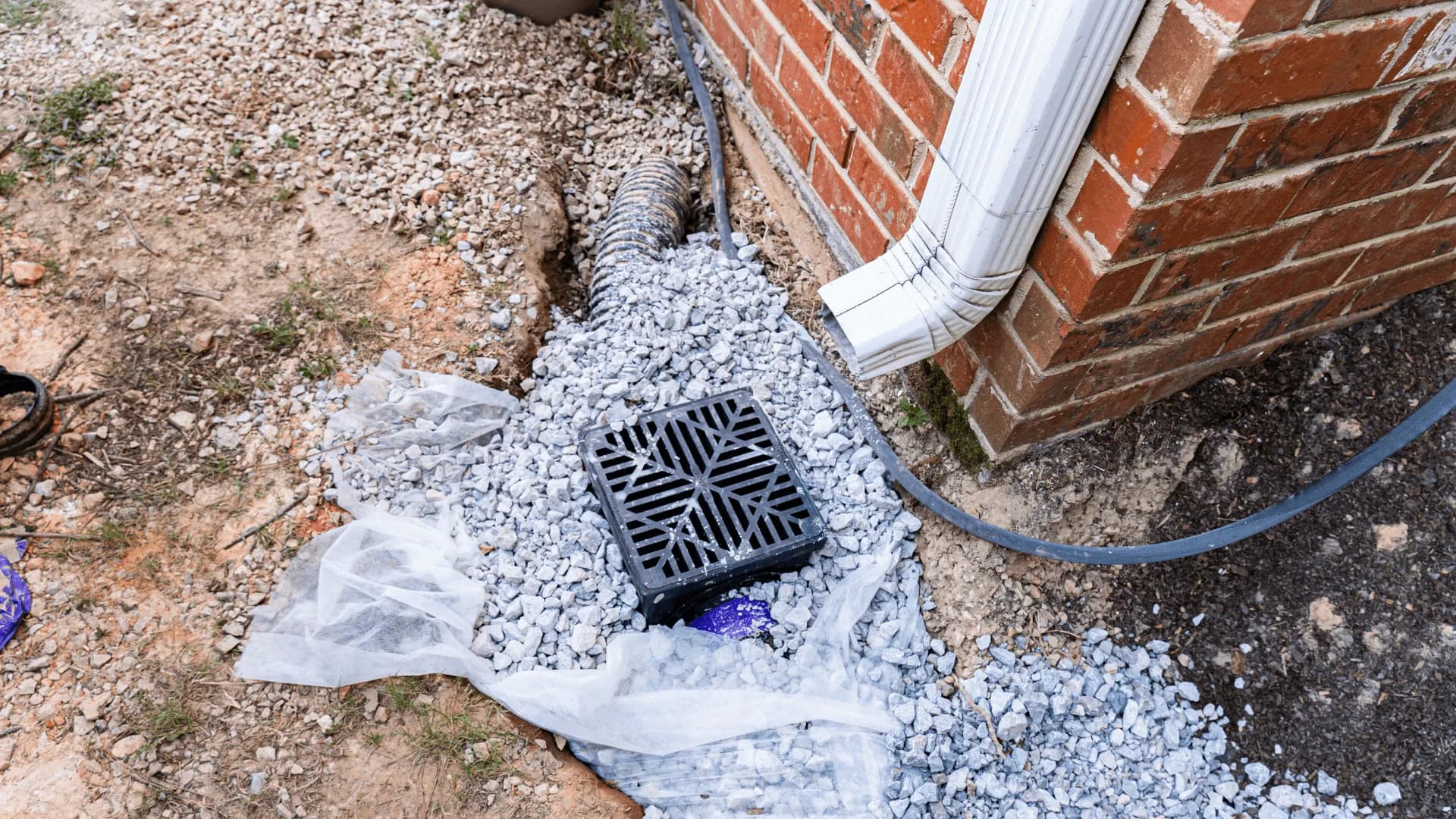
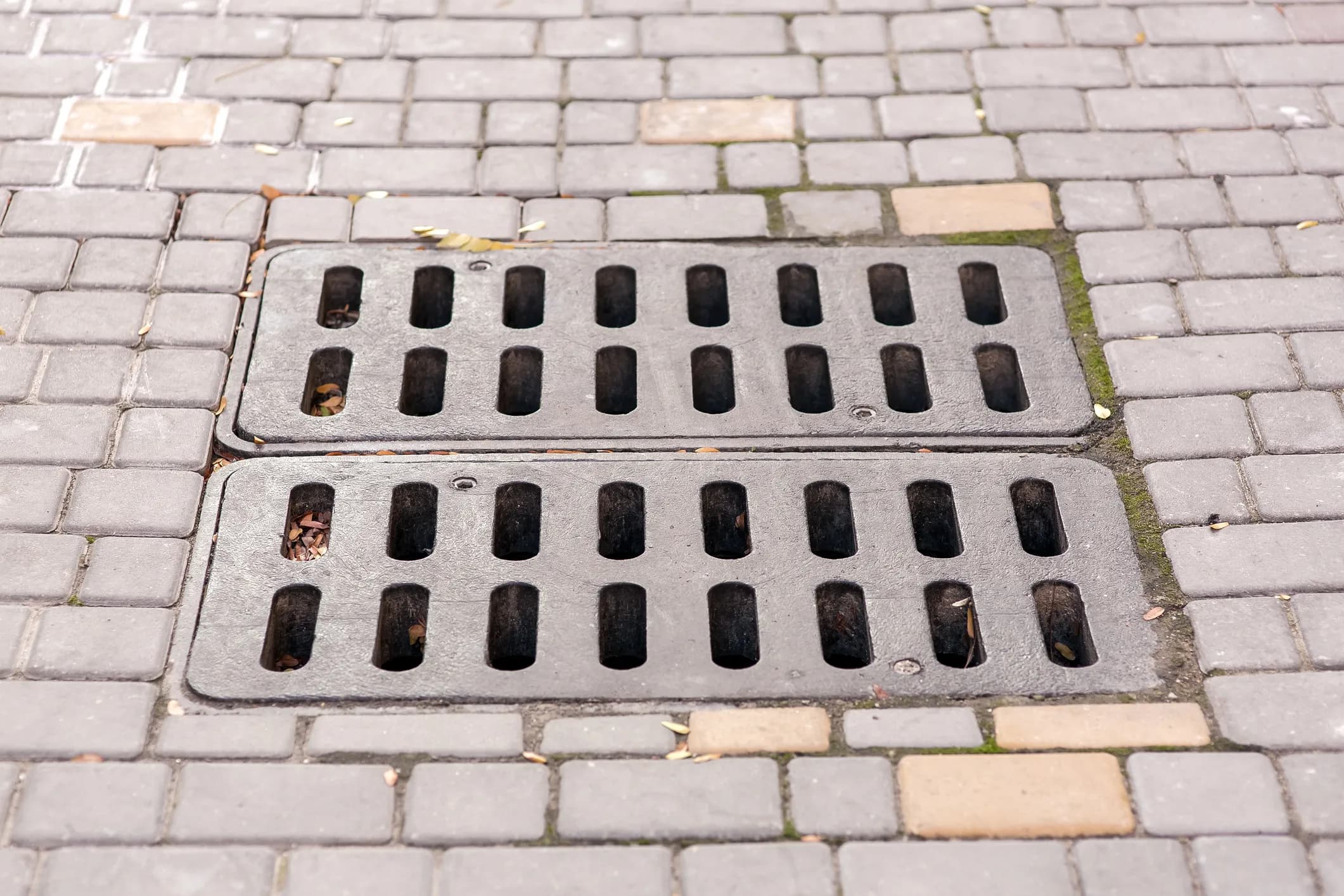
- Catch basins and downspout extensions
- Surface grading and swales
- Erosion control on slopes
- Sump and pump-driven systems where gravity won't move it
- Foundation drainage to keep water away from the house
How it works
From free site visit to finished install.
01
Free site visit
We come during or right after a rain if possible — that's when we can see the actual flow pattern.
02
Diagnosis + plan
Most drainage problems get patched, not solved. We trace the real source and design from there.
03
Locked quote
Once scope is set, the quote is locked. No upfront payment.
04
Install
Excavation, pipe, gravel, fabric, restoration of any disturbed landscaping. Cleanup included.
Recent drainage solutions work
Common questions
What people ask before they book drainage solutions.
Why does my yard have standing water?
Usually one of three things: grade slopes water toward the house instead of away, soil is too compacted to absorb runoff, or roof downspouts dump too close to the foundation. We diagnose during the free site visit (ideally during or right after a rain).
What's the difference between a french drain and a channel drain?
A french drain is a perforated pipe buried in gravel that collects subsurface water — best for soggy lawns and slope runoff. A channel drain is a surface grate across driveways or walkways that catches sheet runoff. We often combine both depending on what's actually moving water on your property.
How much do drainage solutions cost?
Simple downspout extensions and surface grading start around $1,500. Full french drain systems with restoration run $4,000–$12,000. Foundation drainage repairs can run higher. We give a locked quote after the site visit.
Will drainage work damage my existing landscape?
We minimize disturbance and restore everything we touch — sod, plants, hardscape edges. Drainage often hides under landscape once we're done; you shouldn't see it.
Do you require an upfront payment?
No. We never require upfront payment. The free site visit gives you a locked quote, and you're not invoiced until the work is complete.
What areas do you serve?
We work the I-5 corridor from Canby (our HQ) through Aurora, Hubbard, Oregon City, West Linn, Wilsonville, Tualatin, Sherwood, Lake Oswego, Portland, and Salem.
Are you licensed and insured?
Yes. GI Landscape is CCB # 224884, fully licensed, bonded, and insured in the state of Oregon.
Yard drainage· how we build it
The GI French Drain System —
Move the water before it moves your yard.
A properly installed French drain directs groundwater away from foundations, walls, and low-lying areas. Our spec: 18-24" trench depth, 12-18" wide, with 4-inch perforated pipe sloped at 1% minimum to a safe outlet — daylight, storm drain, or dry well.
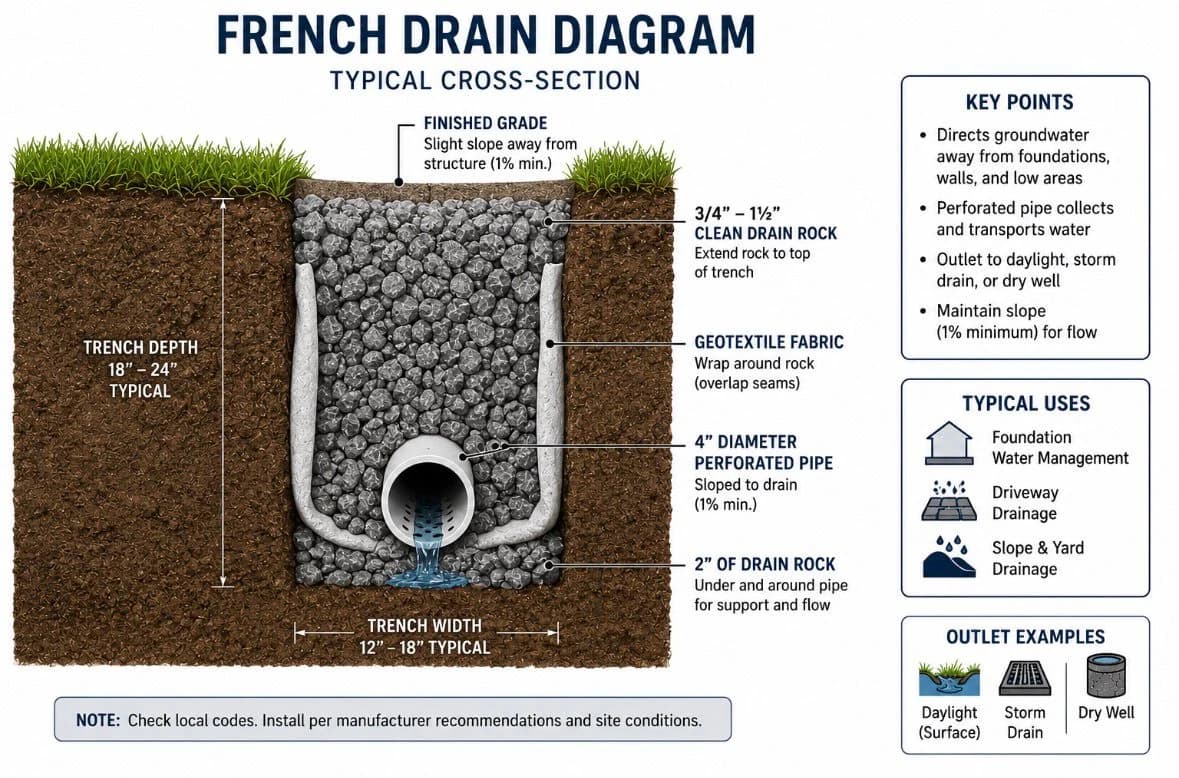
French drains work when they're built to spec and fail when they're not. Our spec: an 18-24 inch deep trench, 12-18 inches wide, sloped at 1% minimum (one inch of drop per eight feet of run) toward the outlet — daylight, storm drain, or dry well depending on the site. The 4-inch perforated pipe sits on 2 inches of clean drain rock at the bottom for support and uninterrupted flow into the perforations. Above that, the trench fills with 3/4 to 1-1/2 inch clean drain rock all the way up. Geotextile fabric wraps the rock with overlapping seams — this is the part most installers skip, and it's the part that determines whether your drain still works in 10 years or whether soil migrates in and clogs the rock. Finished grade slopes away from the structure (1% minimum) so surface water moves toward the trench instead of toward the foundation.
Foundation safe
Keeps water away from your house
Built for PNW rain
40+ inches a year, no problem
Multiple outlet options
Daylight, storm drain, or dry well
30-year design life
Filter fabric protects the system
Free quote. No upfront payment.
Same-week site visits.
Veteran, senior, and neighbor discounts available — ask at your free site visit.