
Turf · 4 min read
The Best Artificial Turf for Dogs (From Someone Who's Installed Hundreds of Dog Yards)
The GI Landscape Team · August 22, 2023 · Updated May 21, 2026
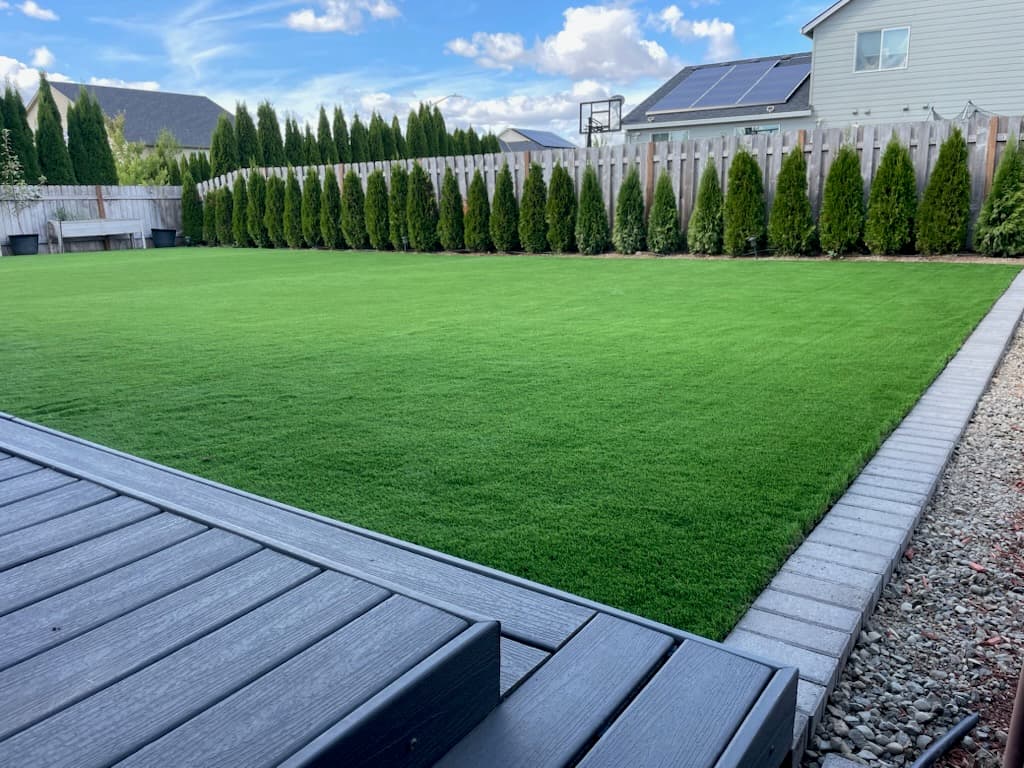
Not all turf is dog turf.
We've installed turf for dog daycares, breeders, single-dog households, and one family in Lake Oswego with seven golden retrievers. Here's what we've learned about what actually works.
Three specs that matter for dogs
- Short, dense pile. A 1.18-inch pile with 55+ oz face weight bounces back from constant traffic. Tall, plush blades look great for two months and look matted forever after that. The W Blade 55 (Pet) is our default for dog yards for this reason.
- Free-draining backing.Real dog turf drains at 80+ inches per hour. That's important because dog urine is mostly water, but the ammonia and uric acid will linger if it doesn't flush through. Cheap turf with slow drainage holds the smell.
- Antimicrobial PU coating. The backing layer matters more than the blades for hygiene. PU-coated double-backed turf resists bacterial growth way better than latex-backed cheap alternatives.
The infill question
Pet turf installs should include zeolite infill. Zeolite is a natural mineral that absorbs ammonia from urine and releases it slowly, kept neutral by occasional rinses. It's the single biggest reason a dog yard doesn't end up smelling like a kennel by August.
Some installers skip it to save labor. Don't let them.
Drainage matters more for dogs than anything else
If you only get one thing right on a dog turf install, get the base drainage right. Oregon clay soil holds water. Without a properly graded sub-base and a 4-inch gravel drainage core, you'll have a yard that holds urine instead of flushing it.
What about training?
Dogs adapt to turf in about 3-7 days. The texture is similar enough to real grass that most dogs use it without any retraining. For new puppies, it's actually easier — no mud paws, no dead spots, no dug-up holes.
Maintenance
Pick up solid waste daily. Rinse weekly in summer, monthly in winter. Brush against the blade direction once a month to keep the pile upright. That's it. No mowing the dog run. No reseeding the dead patches. No mud tracked through the house.
Related reading
- How to Clean Dog Pee From Artificial Turf (No Smell)
- Does Artificial Turf Get Too Hot for Bare Feet?
- 5-Layer Turf Installation: What's Under a Lawn That Lasts
Why GI Landscape: 4.9 stars from 47 Google reviews · Family-run since 2016.